

Ricardo and his flock in Cañizal
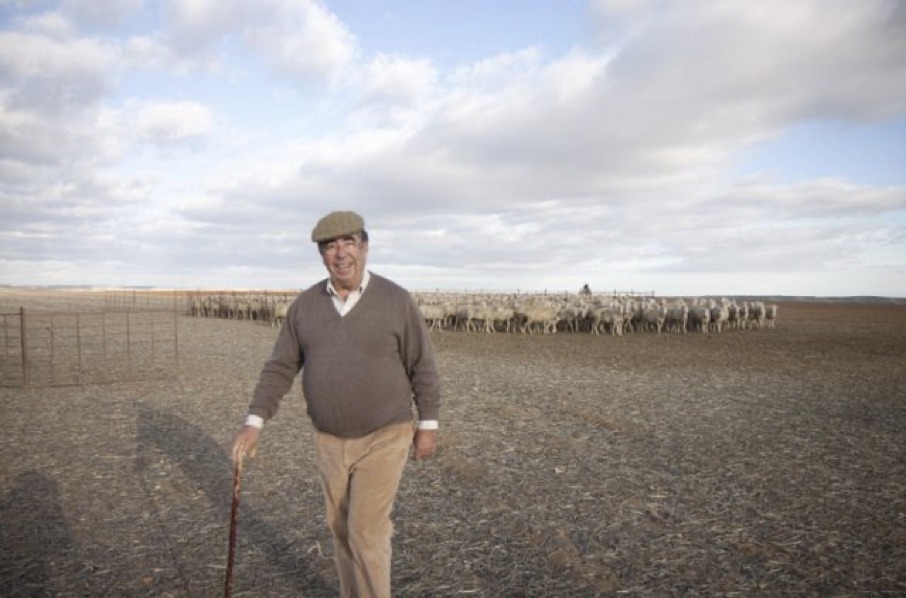
The Spanish Las Hidalgas yarn is part of the Transhumance by Made in Slow project to return to using wool from merino sheep involved in transhumance. This wool comes from the Gómez-Bravo y Daza flock belonging to Ricardo Quintana Gómez Bravo.
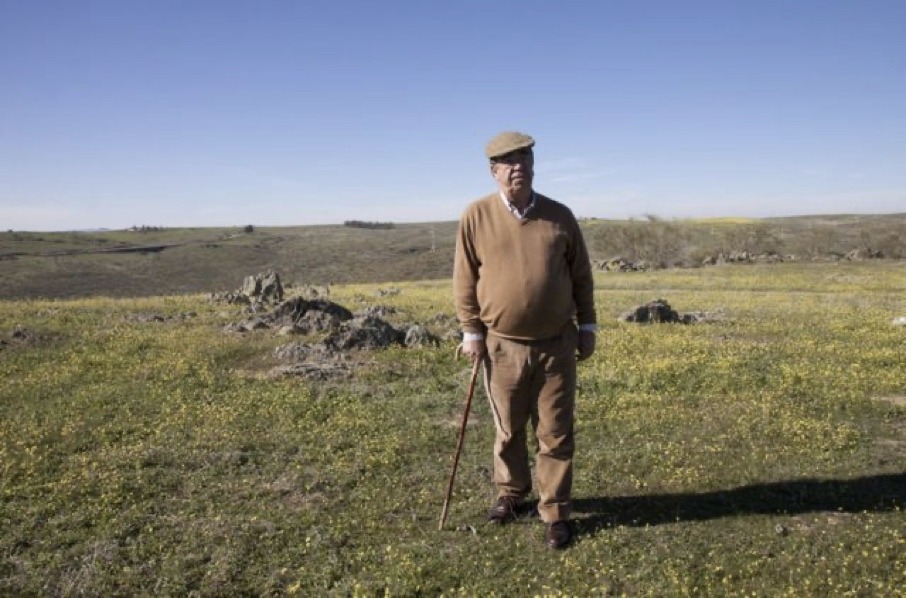
For Ricardo this is an inherited occupation, because his grandfather Gómez Bravo and grandmother Fernández Daza were already involved in transhumance, just as his father was after them. Ricardo went off to be a student, and spent some time away from the countryside, but came back and took up this work in the 1980s.
Ricardo on his famous pasture lands at La Serena in Extremadura
He takes his 2,400 merino sheep from Campanario in the Province of Badajoz as far as Cañizal, the first village in Zamora Province after you cross the border with Salamanca Province. Ricardo says that he can immediately see a benefit when he brings his flock back to Estremadura at the end of November. His winter pasture is in much better shape than the meadows of sheep-owners who keep their animals in the same place the whole year round.
The charming valley where the flock stays for the winter months
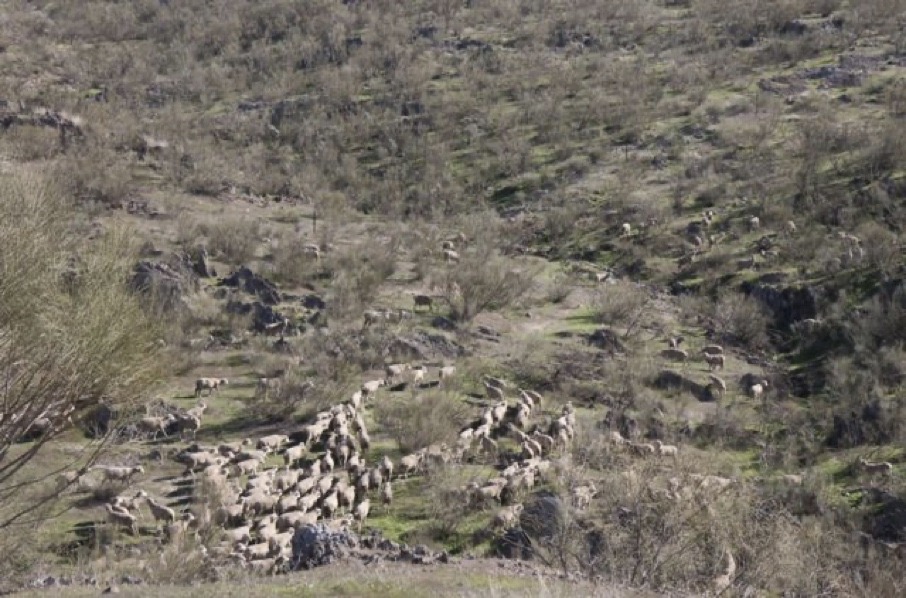
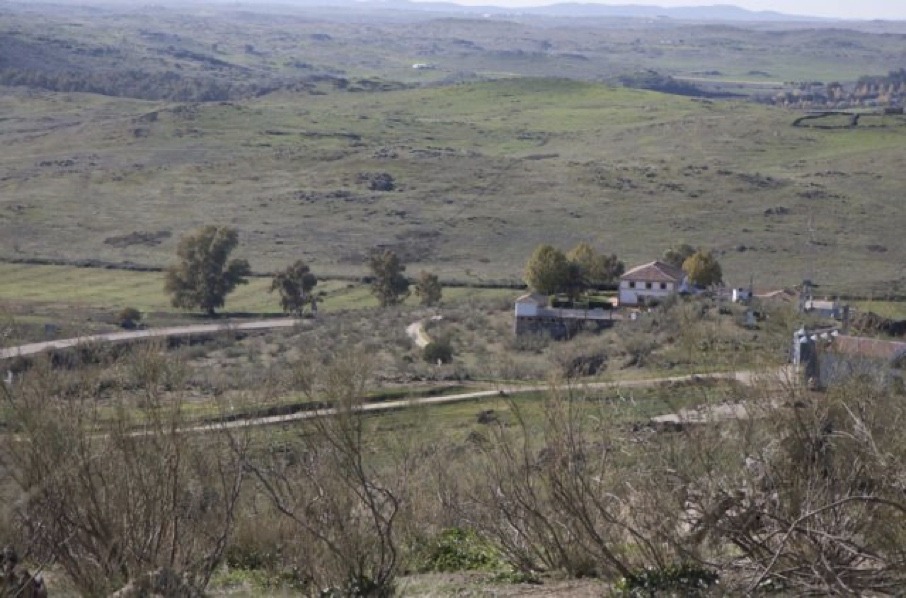
As for him, he’s never done the journey on foot. Even in his grandparent’s day the flocks were moved by train in cattle trucks. While this service was still available, he used to spend the summer with around 6,000 sheep in Sanabria in the Province of Zamora, sharing the pastures with one of his sisters. At the end of the 1980s this rail operation was closed down and he had to adapt and change his destination to Cañizal, easier to get to and closer to home base.
The charming valley where the flock stays for the winter months
He considers himself a lucky man, because his daughter, although a qualified lawyer, loves the countryside as much as he does and will take over from him when he retires. She already owns a flock of sheep kept for their milk, but doesn’t move them around.
One of the big headaches for the continuity of transhumance is the fall in prices paid for sheep products.
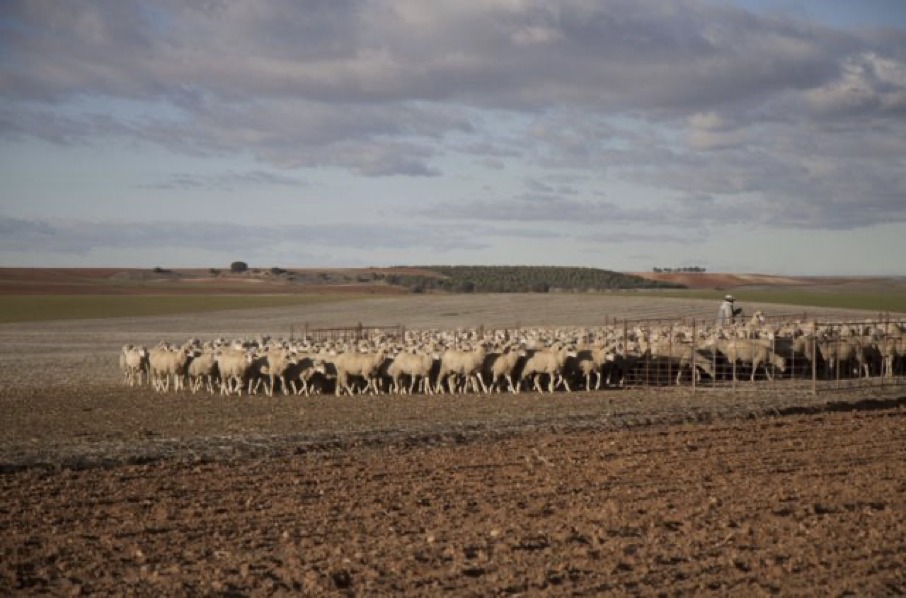
Taking advantage of stubble left after harvesting the crops from arable land at Cañizal in Zamora Province
He makes a profit out of his animals by using their milk to make his own variety of merino cheese called La Torta de la Serena. This is similar to the Torta de Casares style of cheese, which uses thistle juice to produce curds from the milk. At the moment he has two brands, “Cremosito del Zujar”, and another type with a protected designation of origin, “Extreme 10”.
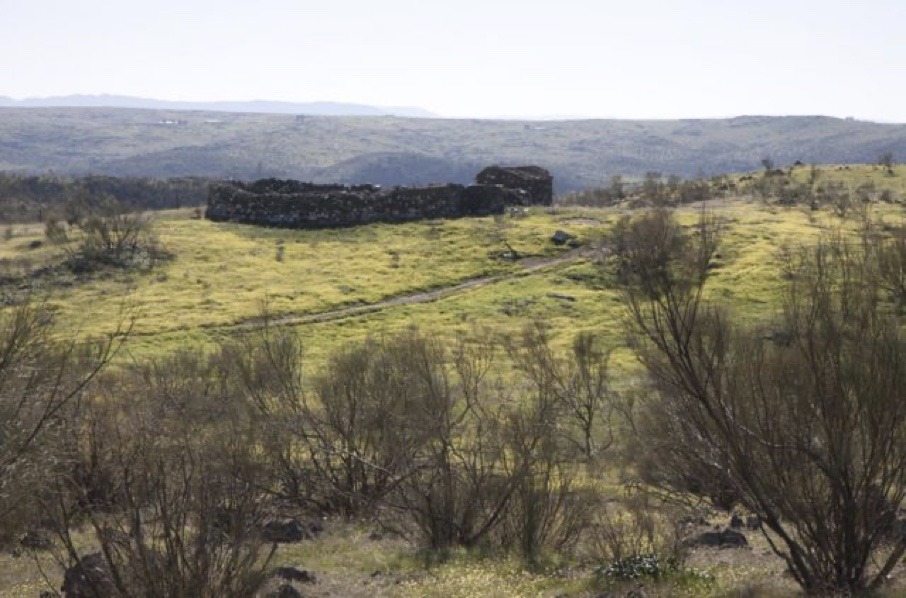
An old shepherd’s hut with a small sheepfold, on the El Pizarroso farm.